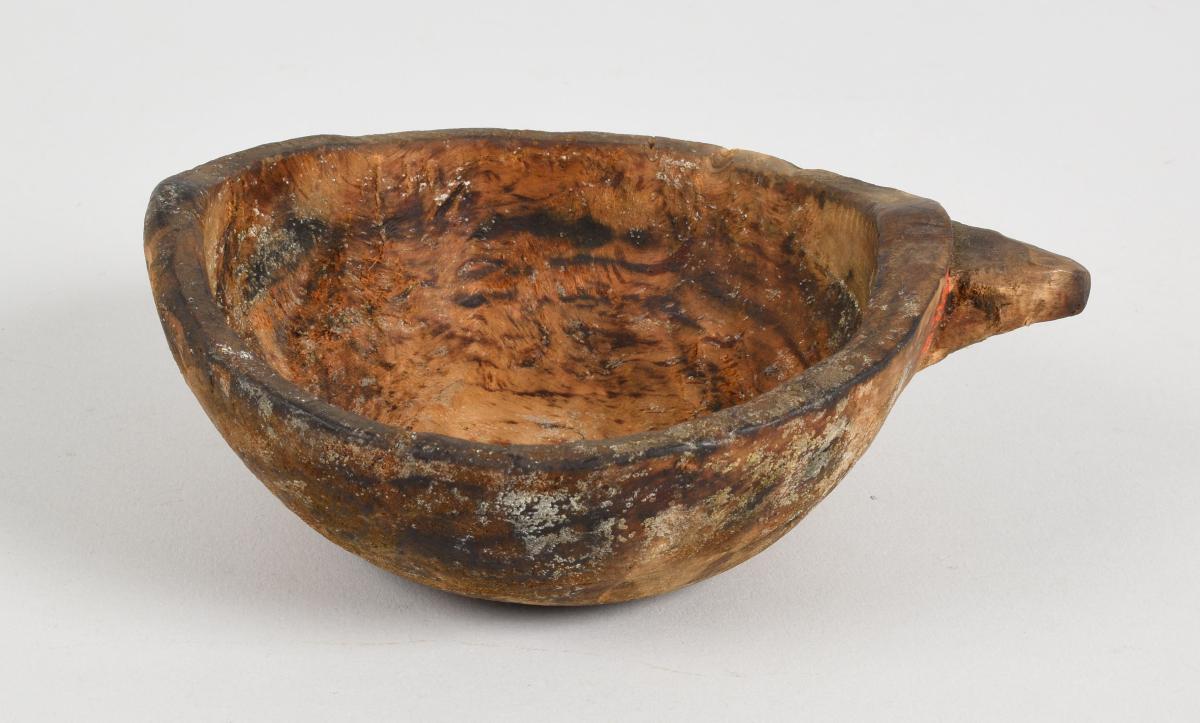
A kuksa. The making place is Utsjoki. The material is burl.
1800–1899. A round, deep wooden vessel. The base is flat, and one side has a small handle.Photo: Sámi Museum Siida. Licence: CC BY-NC-ND 4.0. The image is unchanged.
Kittilä
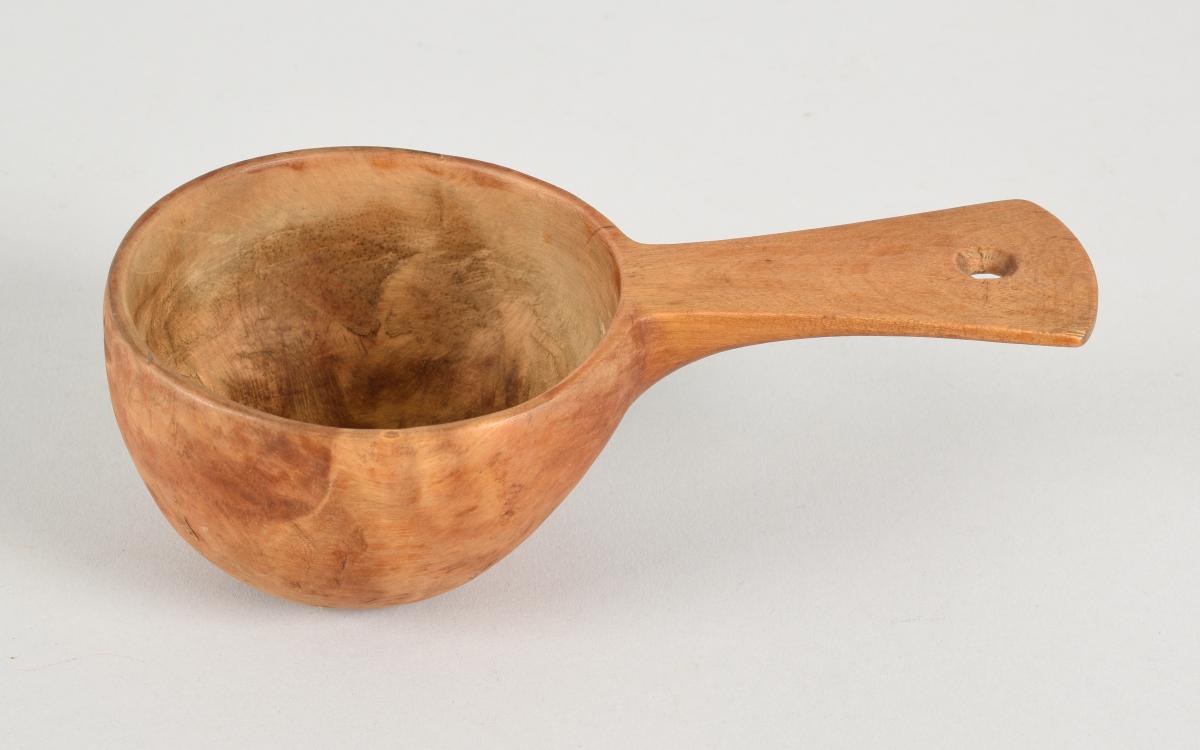
A kuksa. The making place is Kittilä. The material is burl.
1800–1899. A deep kuksa. The round bowl has an even outer edge. The handle widens and has a round hole at the end.Photo: Sámi Museum Siida. Licence: CC BY-NC-ND 4.0. The image is unchanged.
Enontekiö
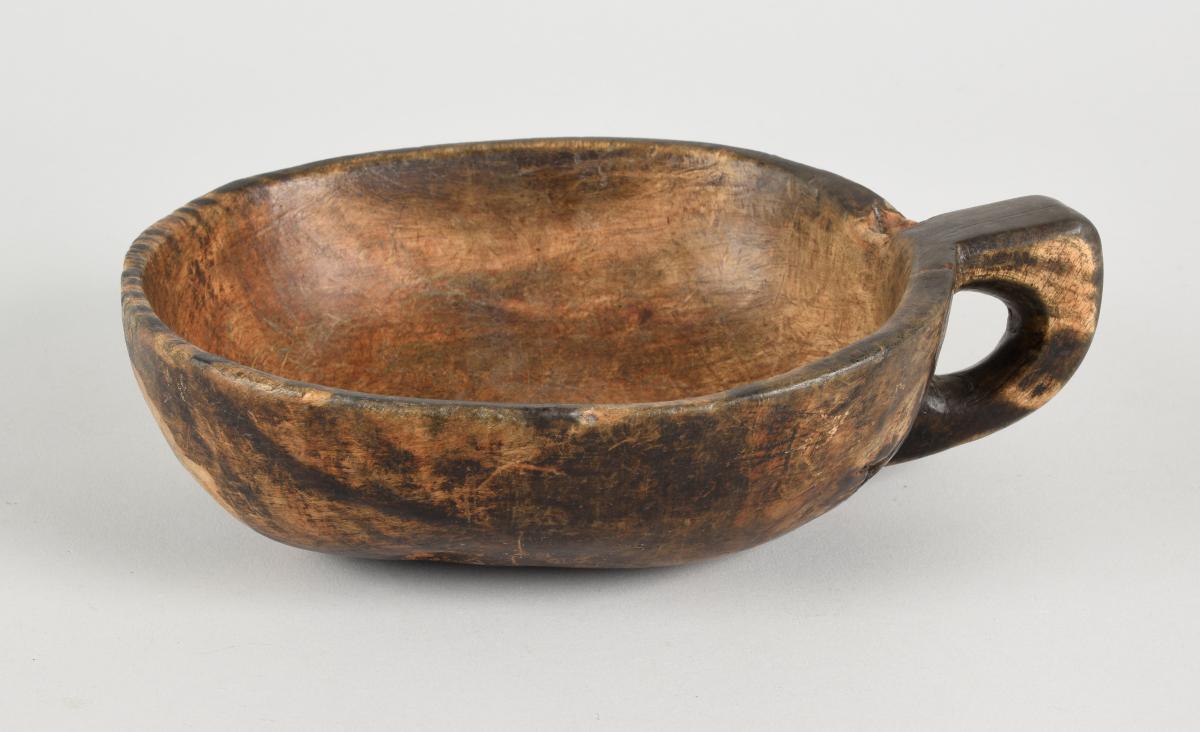
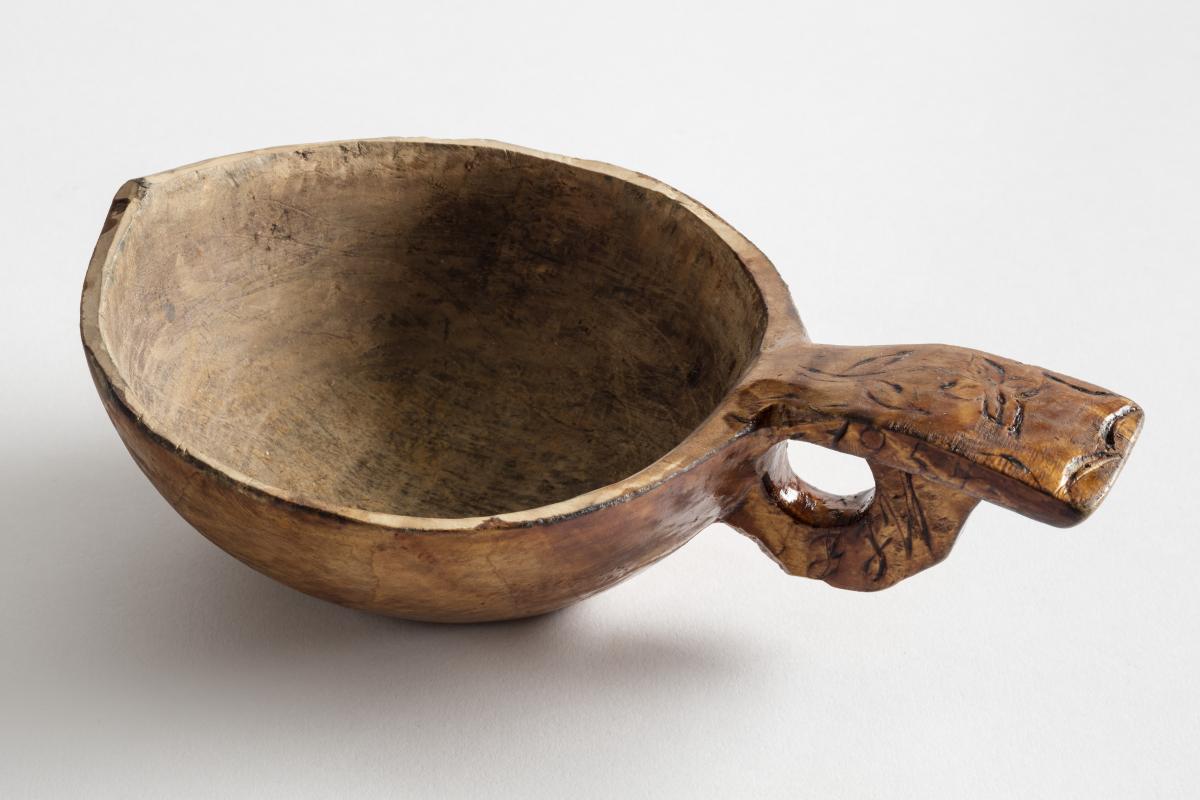
Two kuksas. The making place is Enontekiö.
1900–1949. Hollowed from a rectangular piece of birch burl. It curves roundly toward a flat base. An ear carved from the same wood has a hole. A triangular burn mark on the outside was carved away, and the edges of that cut were smoothed wider, so pale wood shows.Photo: Sámi Museum Siida. Licence: CC BY-NC-ND 4.0. The image is unchanged.1940–1944. The materials are burl and birch. The handle combines a ladle shaft and a cup ear. A flower with its stem is carved on the shaft. The front edge has a sharp spout. The outside is thinly lacquered.Photo: Sámi Museum Siida. Licence: CC BY-NC-ND 4.0. The image is unchanged.
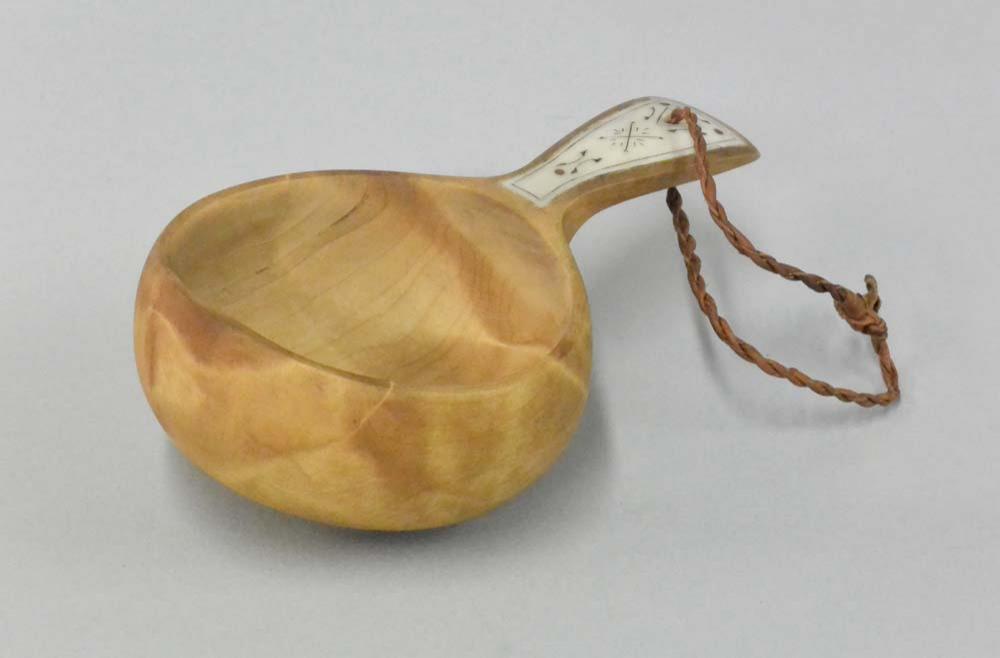
Inari
A kuksa. The maker is Birit-Anni Lehtola (née Pieski). The making place is Inari.
1979. A wooden burl cup. A horn piece is inlaid in the handle, and its edges and center are decorated. A braided sisna thong passes through a triangular hole at the end of the handle. The ends are tied together. The bowl is oval. The outer edge is sharper opposite the handle and otherwise even.Photo: Sámi Museum Siida. Licence: CC BY-NC-ND 4.0. The image is unchanged.
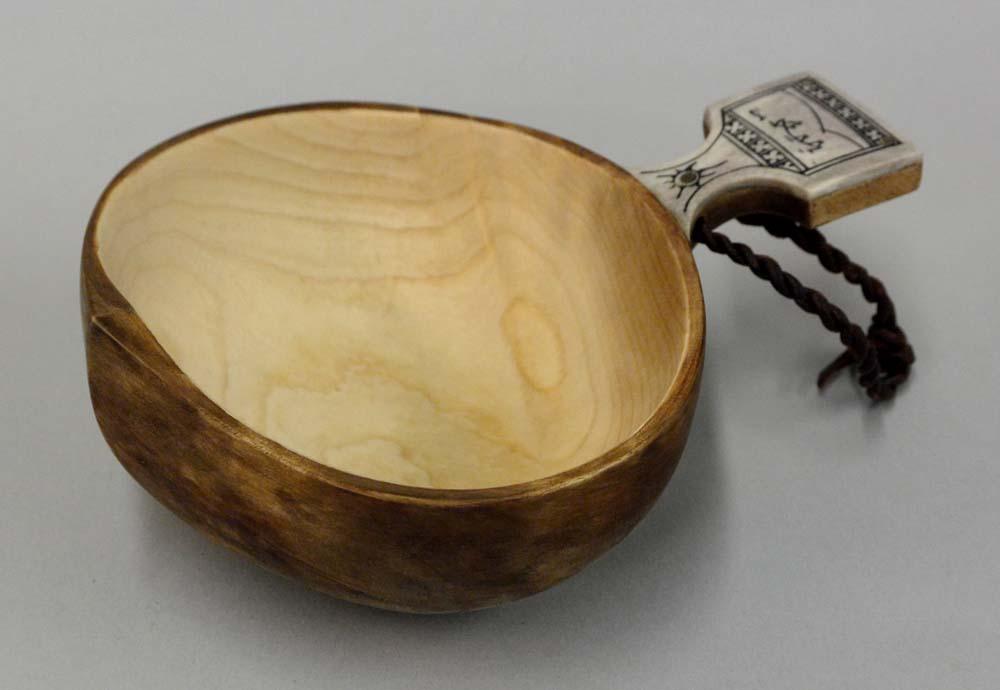
Utsjoki
A kuksa. The making place is Utsjoki. The materials are wood, reindeer leather, and reindeer horn.
2007. The outside is treated darker than the inside. The bowl is oval, and the base is round. The horn on the handle has a pictorial ornament in the center and a sun around a rivet at the base. The horn is fastened with iron rivets or nails. A sisna cord passes through a hole under the handle, and its ends are tied together.Photo: Sámi Museum Siida. Licence: CC BY-NC-ND 4.0. The image is unchanged.