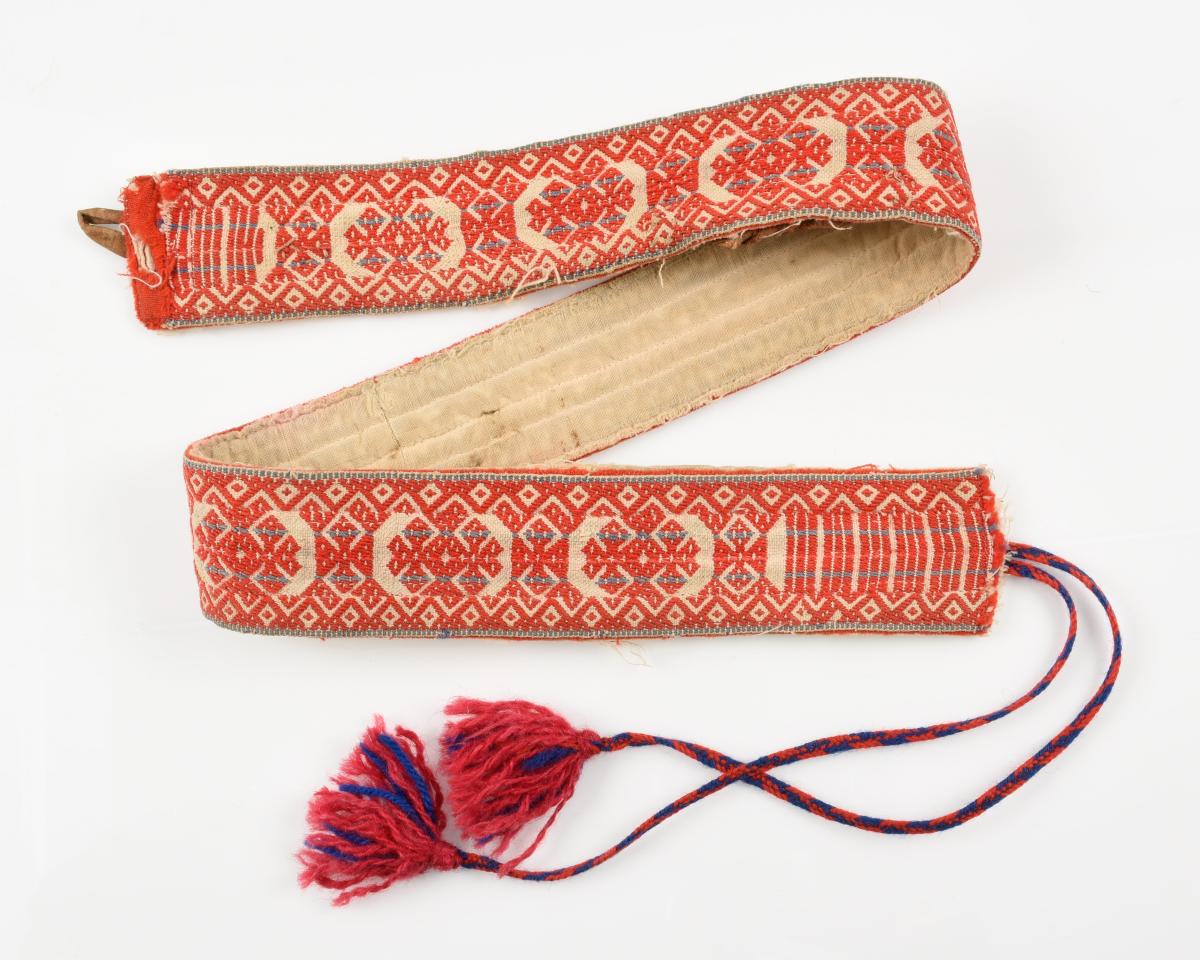
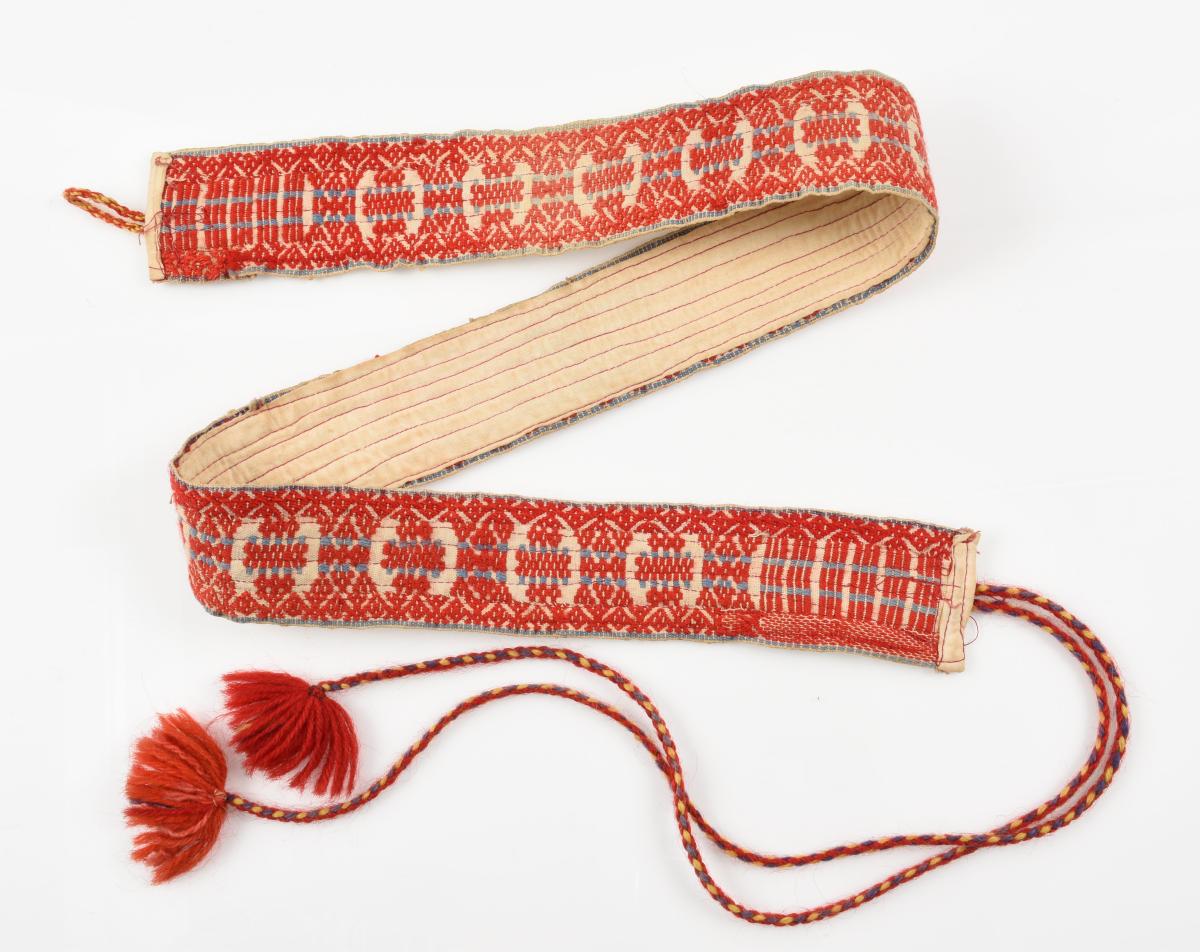
Two woven belts. The making place is Utsjoki. The 1900–1920 belt also names Teno. The catalog dates are ranges.
1930–1950. A man’s woven belt. The ground is light and the pattern is red and blue. The backing is linen. The model is Ohcejohka.Photo: Sámi Museum Siida. Licence: CC BY-NC-ND 4.0. The image is unchanged.1900–1920. A woman’s woven belt. The ground is white and the pattern is red and blue. It is made of three bands. The model line is Ohcejohka, and the summary also says a Karasjok model. The making places are Utsjoki and Teno.Photo: Sámi Museum Siida. Licence: CC BY-NC-ND 4.0. The image is unchanged.
Enontekiö
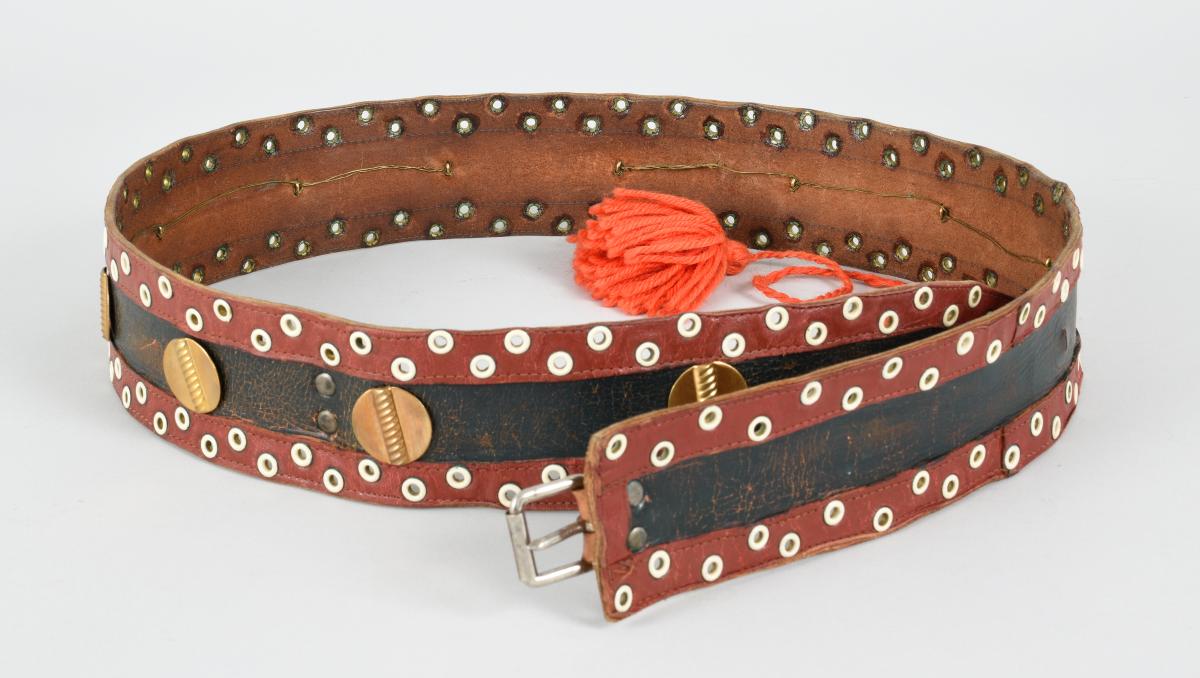
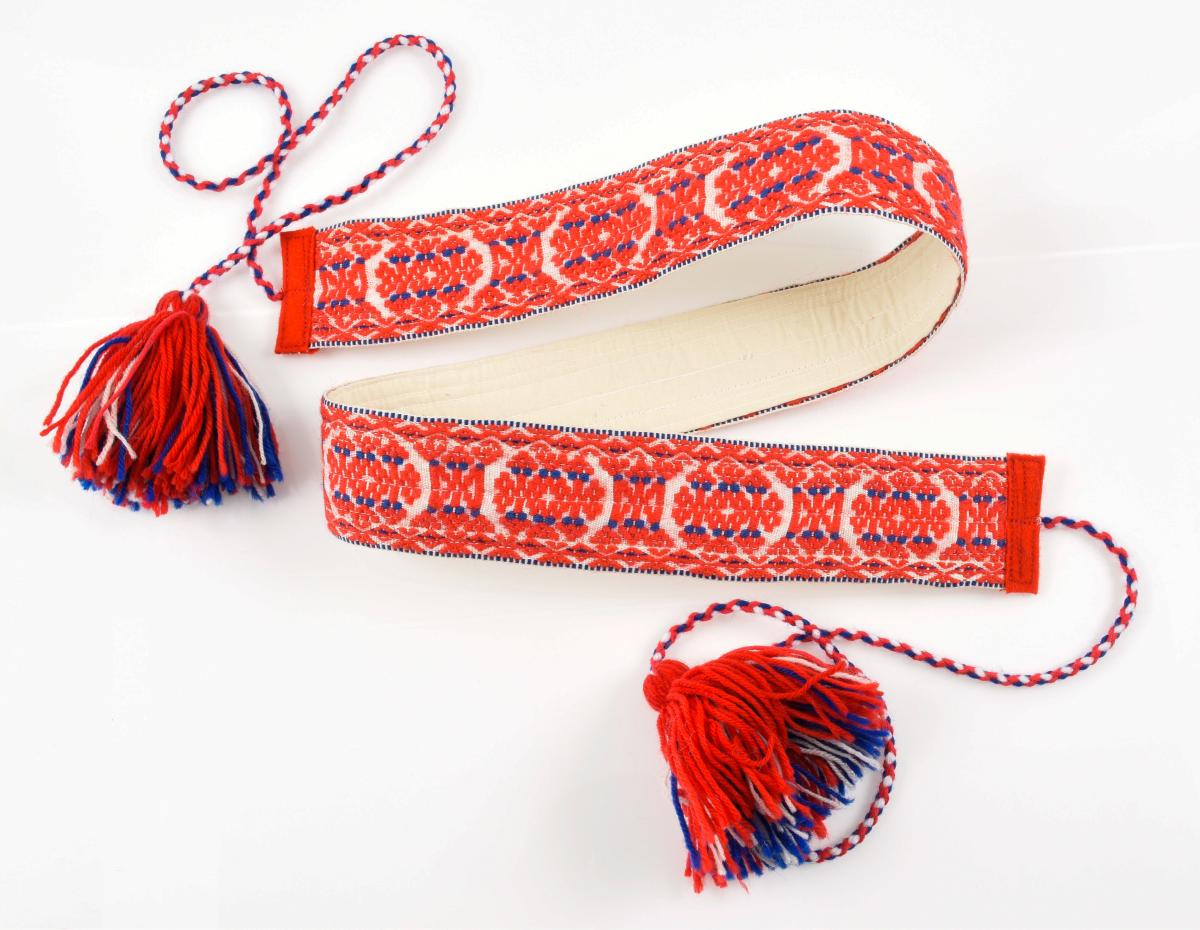
Two belts. One is from Näkkälä, the other from Nunnanen.
1953. A woman’s black leather belt, with a red edge, white decorative rivets, and round copper buttons. The model is Eanodat. The making places are Enontekiö and Näkkälä.Photo: Sámi Museum Siida. Licence: CC BY-NC-ND 4.0. The image is unchanged.1990. A niisivyö, woven with a pirta. The catalog calls the object unused. The ground threads are white cotton, and the pattern threads are red and blue wool. The making places are Enontekiö and Nunnanen.Photo: Sámi Museum Siida. Licence: CC BY-NC-ND 4.0. The image is unchanged.
Inari
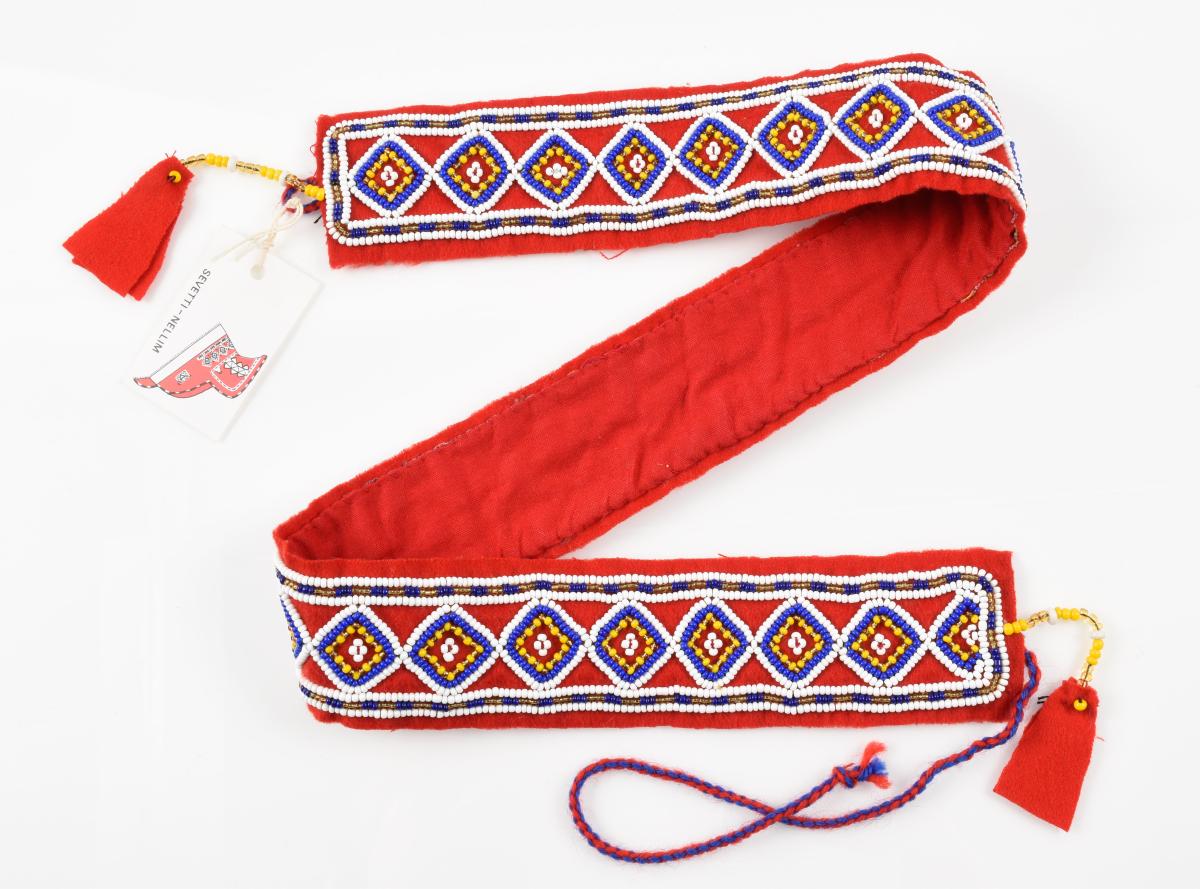
One belt. The making places are Inari, Sevettijärvi, and Supru.
1978. A woman’s belt belonging to a dress. The cloth is red broadcloth and the decoration is glass beads. The catalog calls the pattern traditional and the model Skolt.Photo: Sámi Museum Siida. Licence: CC BY-NC-ND 4.0. The image is unchanged.
Tornio
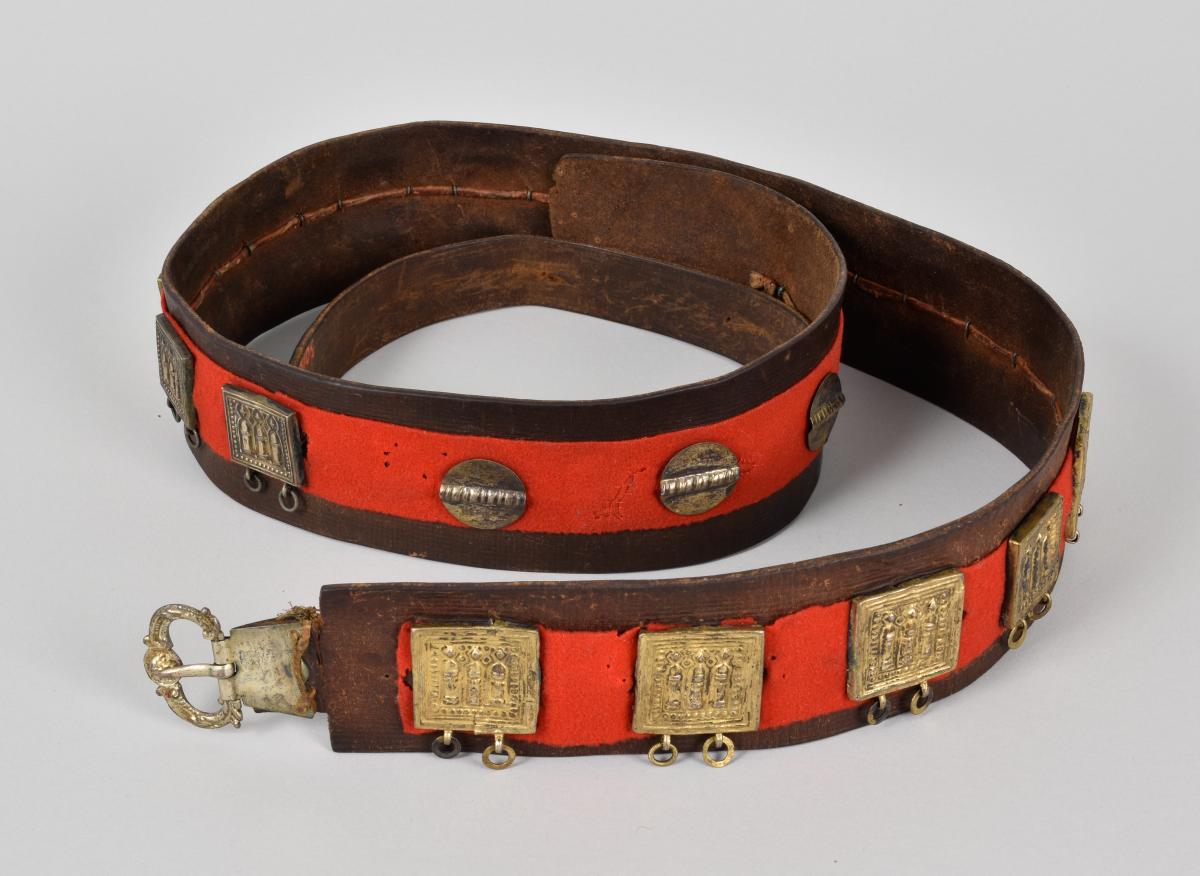
A belt. The making place is Tornio.
1841. A leather belt. Gold-colored and silver-colored mounts are fixed to a strip of red broadcloth. On the square mounts, the catalog describes a motif of three saints inherited from the Renaissance. The round mounts have a rope braid.Photo: Sámi Museum Siida. Licence: CC BY-NC-ND 4.0. The image is unchanged.