Skip to content
Lapinkylä

Sámi dress

1674

The plate shows a man, a woman with a child in a cradle, and a child. Schefferus writes that summer and winter clothes were different garments, and that the winter coat was made of reindeer skin. This is not the dress of one place. (Schefferus 1674)
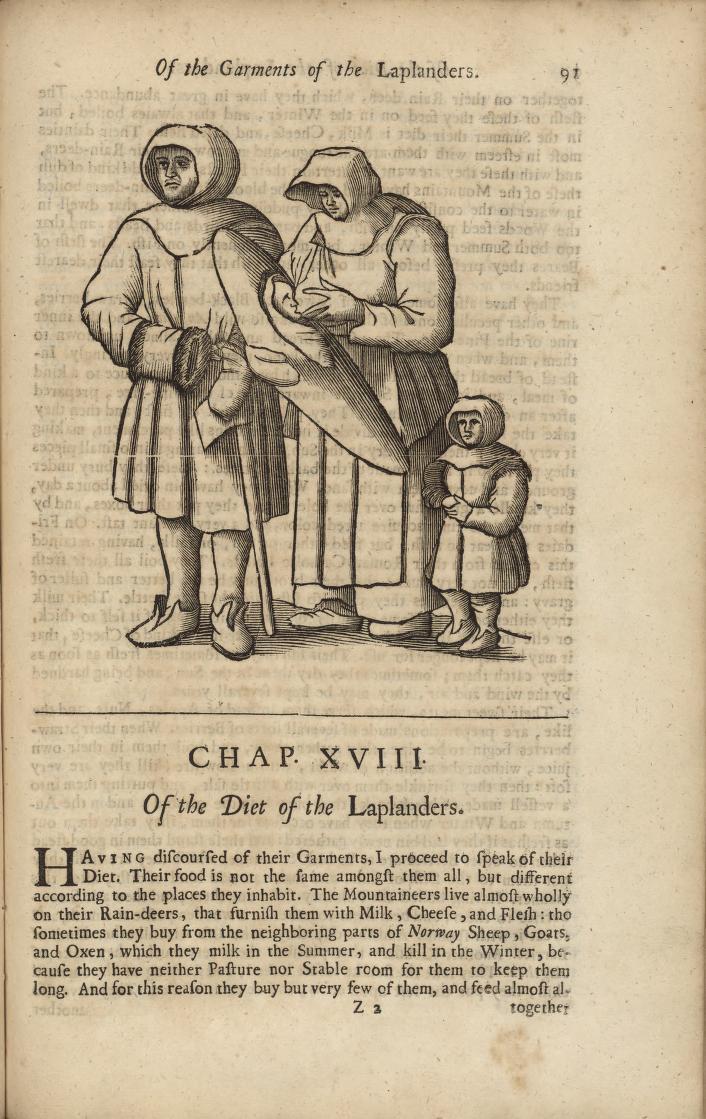
1674. Hooded coats. A man, a woman with a child in a cradle, and a child.
1674. Hooded coats. A man, a woman with a child in a cradle, and a child.Drawing: Johannes Schefferus. Licence: Public domain. The image is unchanged.

Enontekiö

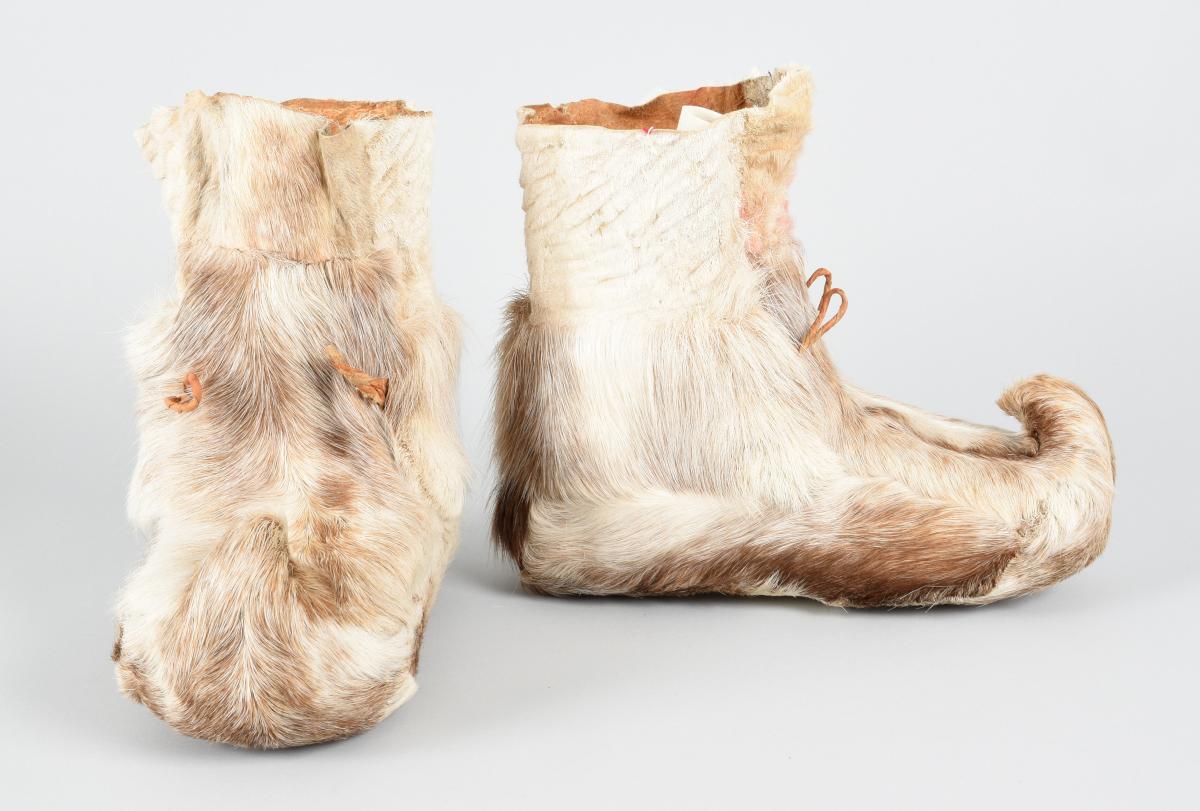
One of the five main Sámi dresses in Finland. The encyclopaedia groups it with the Kautokeino dress, as a North Sámi costume: a fringed shawl for the women, a scarf for the men. From Siida’s collection: a man’s luhkka, and fur shoes. The catalog place of the shoes is Näkkälä. A current garment is still missing. (Sámi Parliament of Finland; Encyclopaedia; Sámi Museum Siida)
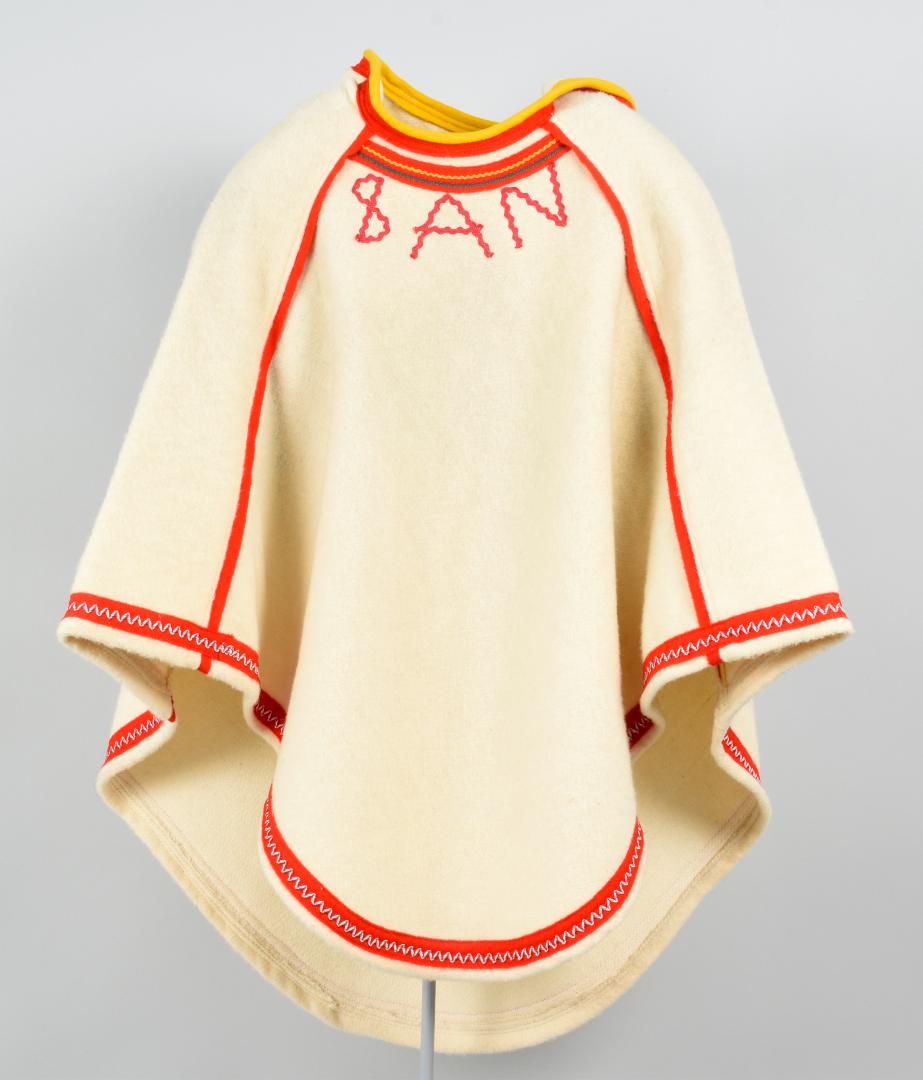
1900. A man’s luhkka. The catalog place is Enontekiö.
1900. A man’s luhkka. The catalog place is Enontekiö.Photo: Sámi Museum Siida. Licence: CC BY-NC-ND 4.0. The image is unchanged.
1953. Fur shoes. The catalog place is Enontekiö, Näkkälä.
1953. Fur shoes. The catalog place is Enontekiö, Näkkälä.Photo: Sámi Museum Siida. Licence: CC BY-NC-ND 4.0. The image is unchanged.

Sámi Museum Siida

Utsjoki

One of the five dresses. Siida’s collection page says that in Utsjoki, women’s fur gaiters were replaced early with knitted ones. From the collection: a woman’s cloth cap, catalog model Ohcejohka. (Sámi Parliament of Finland; Siida)
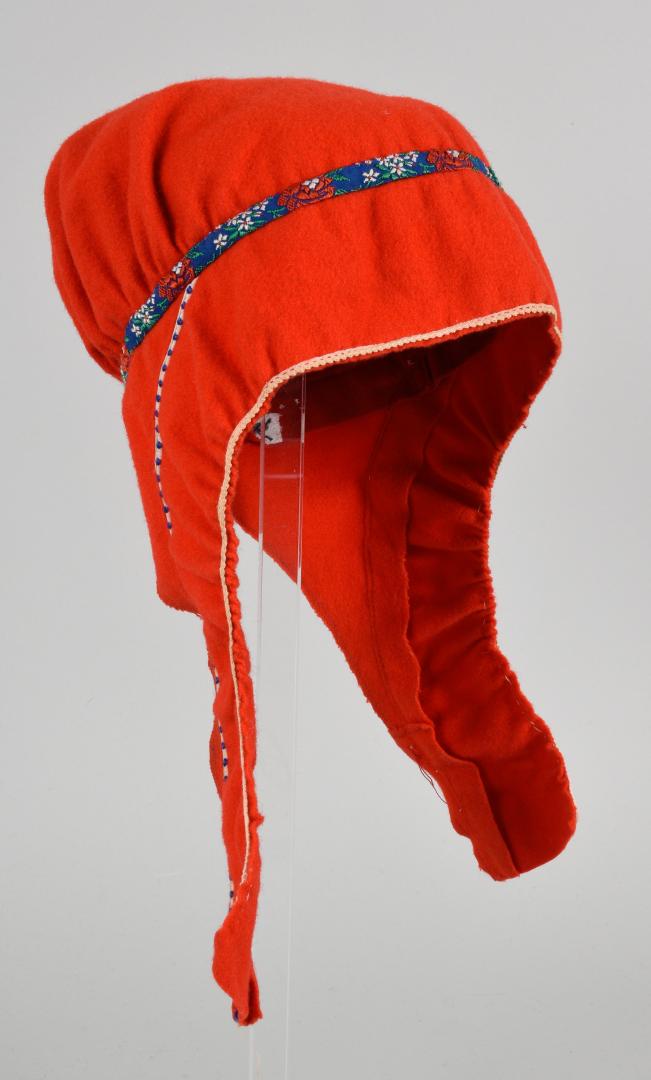
1930. A woman’s cloth cap. The catalog model is Ohcejohka.
1930. A woman’s cloth cap. The catalog model is Ohcejohka.Photo: Sámi Museum Siida. Licence: CC BY-NC-ND 4.0. The image is unchanged.

Sámi Museum Siida

Inari

The ground is black or dark blue. The decoration is red, yellow, and green, a family pattern or the wearer’s own. Siida says the decoration is similar to Vuotso. From the collection: a woman’s summer dress the catalog says was made in Inari. (Siida, Anaras)
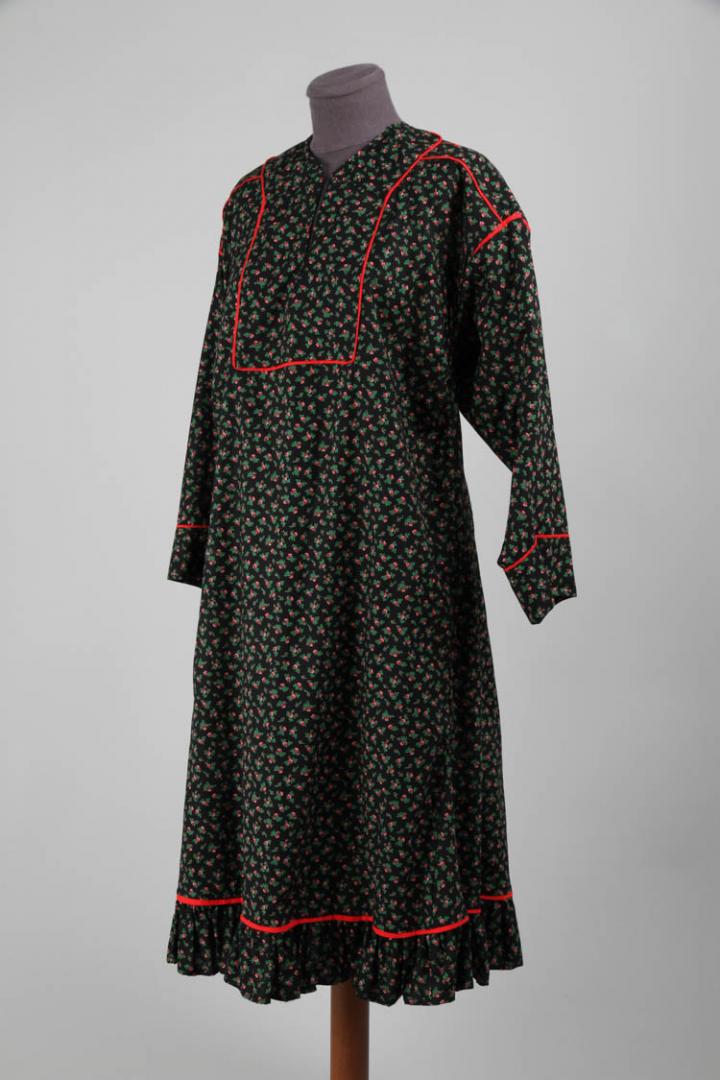
A woman’s summer dress. The catalog gives Inari as the place it was made.
A woman’s summer dress. The catalog gives Inari as the place it was made.Photo: Sámi Museum Siida. Licence: CC BY-NC-ND 4.0. The image is unchanged.

Vuotso

One of the five dresses. The Inari dress page says the Inari decoration is similar to Vuotso. From Siida’s collection: a man’s winter hat, catalog model Vuohčču. (Sámi Parliament of Finland; Siida)
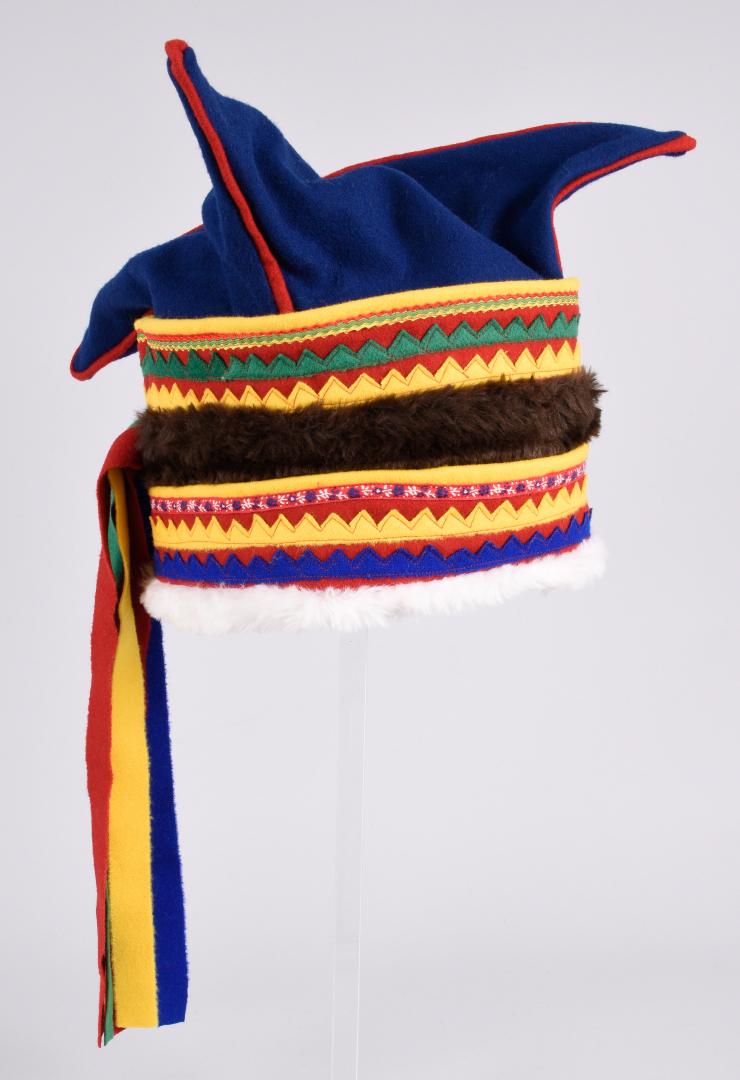
1991. A man’s winter hat. The catalog model is Vuohčču.
1991. A man’s winter hat. The catalog model is Vuohčču.Photo: Sámi Museum Siida. Licence: CC BY-NC-ND 4.0. The image is unchanged.

Skolt

Skolt dress includes the sarafan and the shirt. A woman’s headgear showed whether she was married. From Siida’s collection: a widow’s headdress and a man’s dress. (Siida)
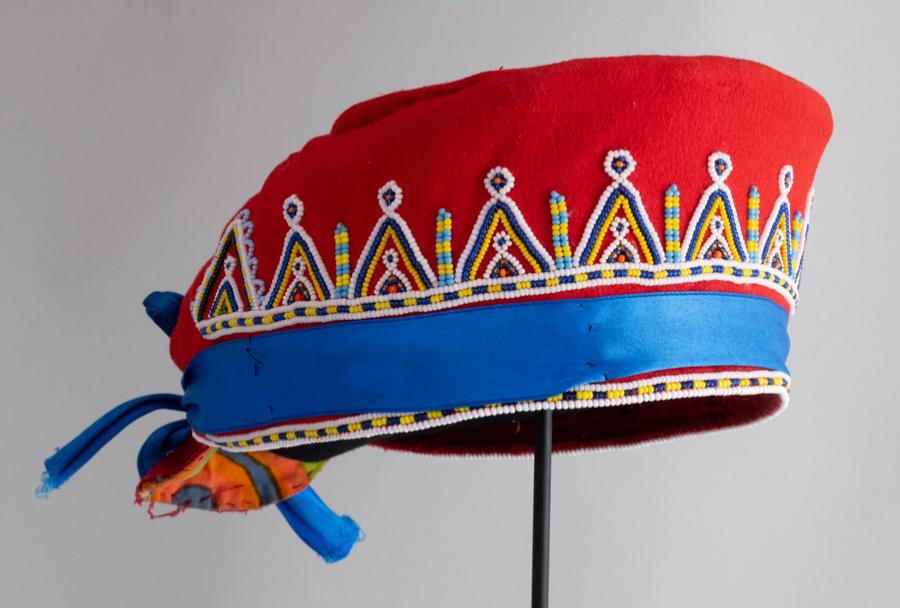
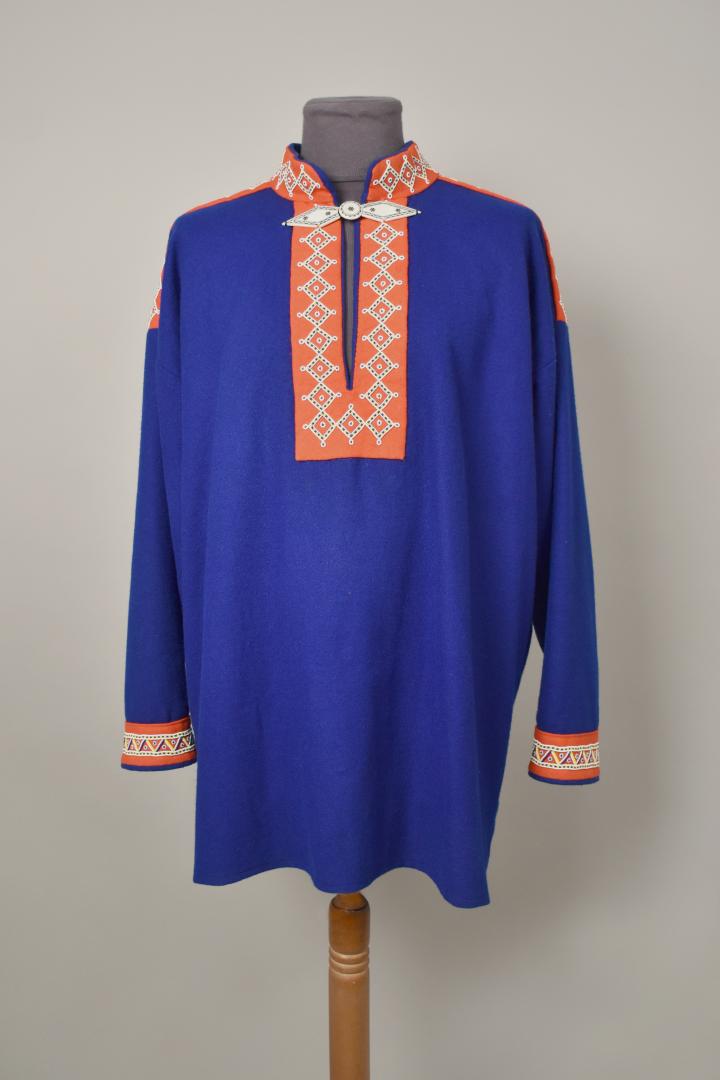
A Skolt widow’s headdress.
A Skolt widow’s headdress.Photo: Sámi Museum Siida. Licence: CC BY-NC-ND 4.0. The image is unchanged.
A Skolt man’s dress.
A Skolt man’s dress.Photo: Sámi Museum Siida. Licence: CC BY-NC-ND 4.0. The image is unchanged.

Kautokeino

A North Sámi dress, grouped with Enontekiö. A fringed shawl for the women, a scarf for the men. (Encyclopaedia)

Norsk Folkemuseum
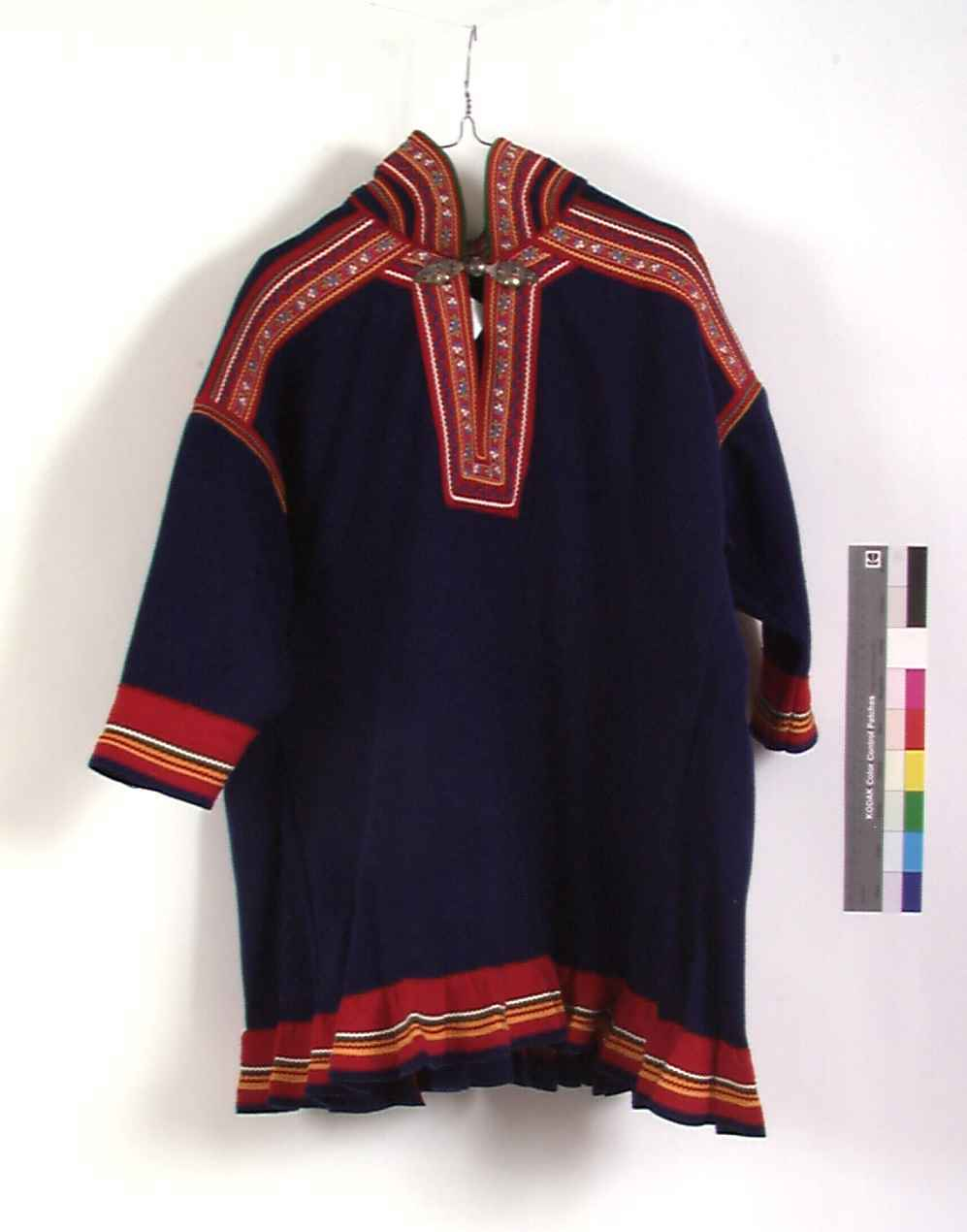
1957. A boy’s gákti of dark cloth. Red bands at the neck, cuffs, and hem, and metal clasps at the neck. Sewn in Kautokeino.
1957. A boy’s gákti of dark cloth. Red bands at the neck, cuffs, and hem, and metal clasps at the neck. Sewn in Kautokeino.Photo: Anne-Lise Reinsfelt, Norsk Folkemuseum. Licence: CC BY-SA 4.0. The image is unchanged.

Norsk Folkemuseum

Karasjok

A woman’s gákti, a North Sámi dress. This one was made in Karasjok and worn in Tana about 1929.

Norsk Folkemuseum
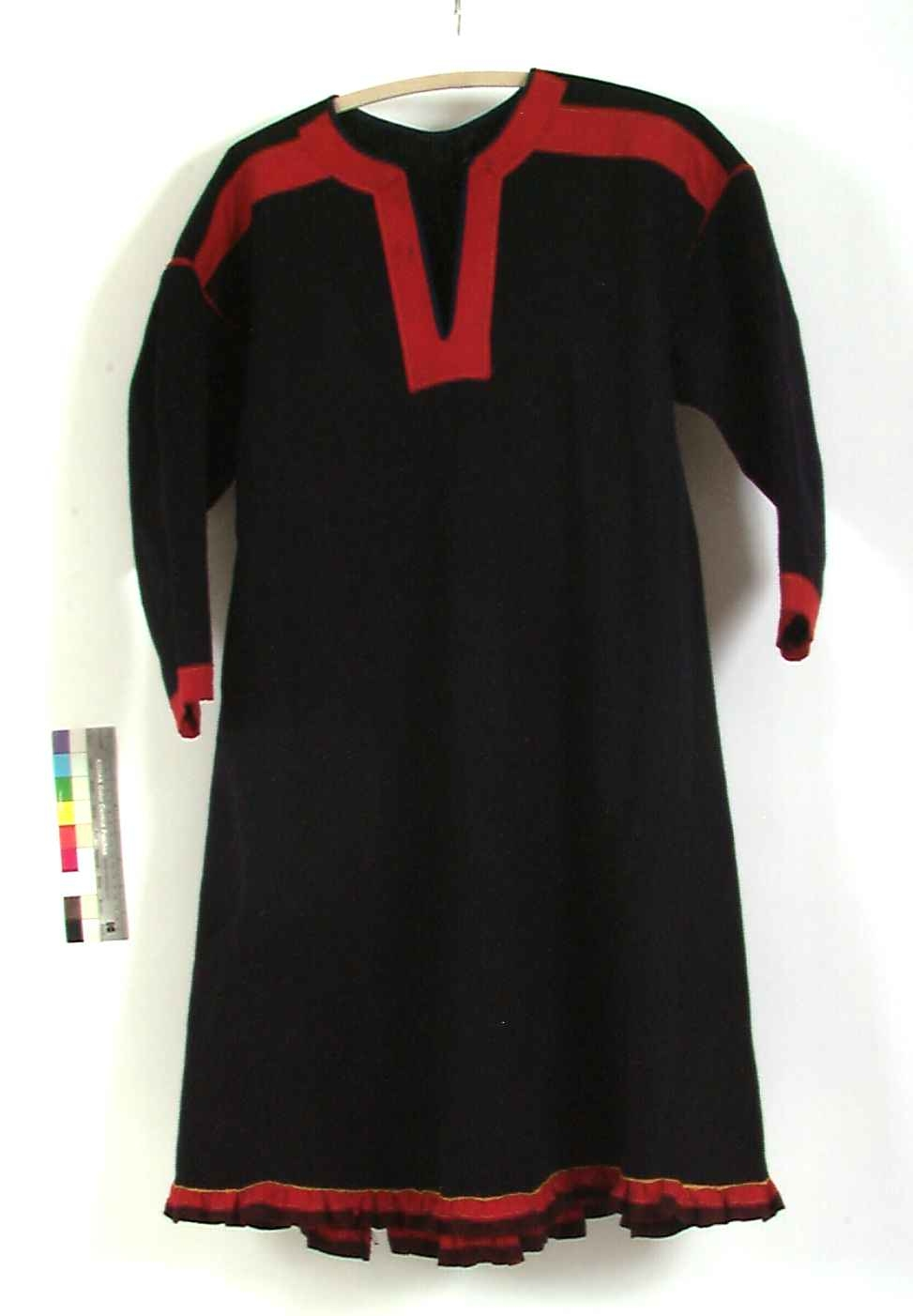
1929. Dark cloth, a red neck opening and cuffs, and a red band at the hem.
1929. Dark cloth, a red neck opening and cuffs, and a red band at the hem.Photo: Anne-Lise Reinsfelt, Norsk Folkemuseum. Licence: CC BY-SA 4.0. The image is unchanged.

Norsk Folkemuseum

Nervei

Nervei is in Gamvik, on the Tanafjord. The gákti was bought in 1909 and was already called very old.

Norsk Folkemuseum
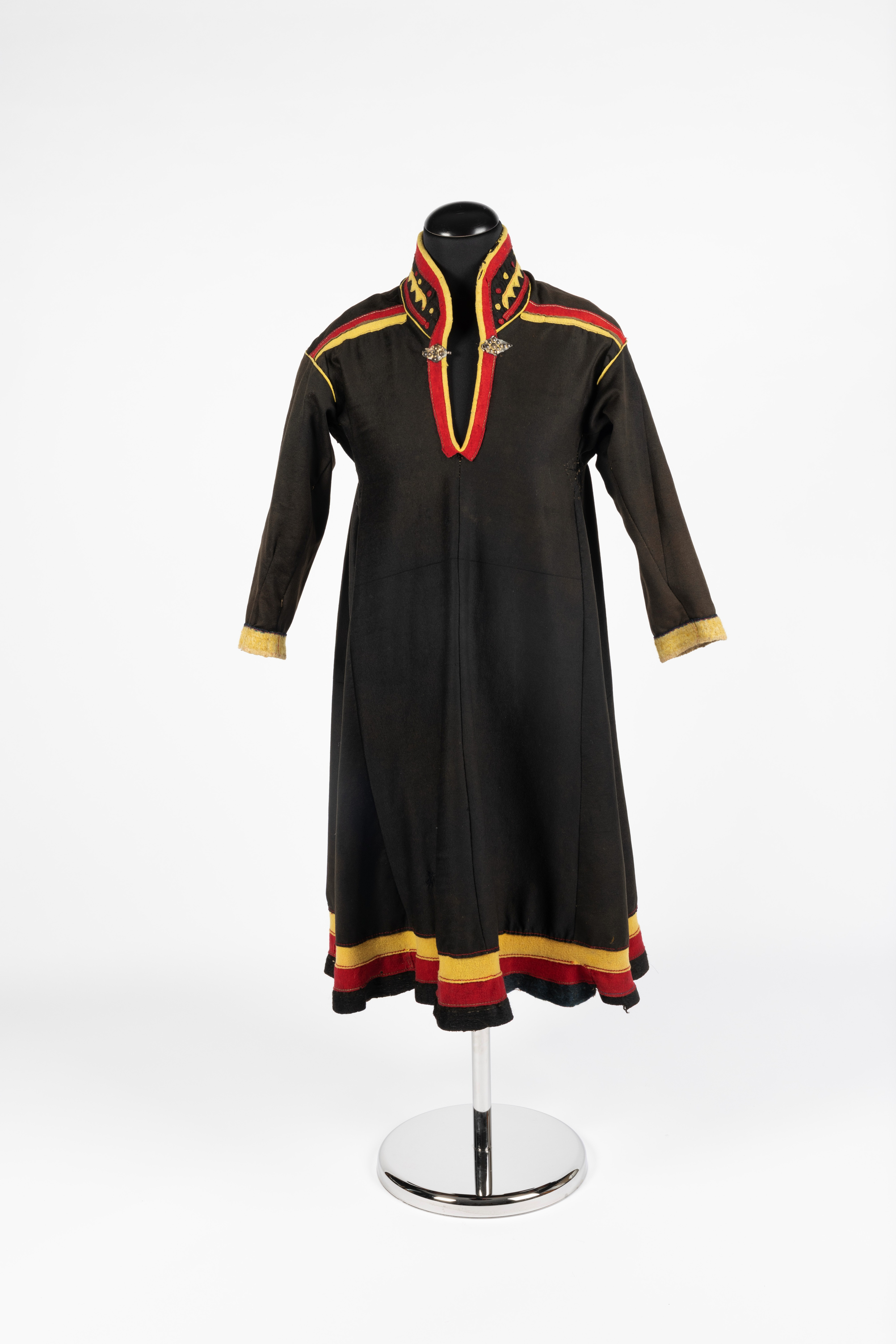
1909. Dark cloth, with red and yellow bands at the neck and the hem.
1909. Dark cloth, with red and yellow bands at the neck and the hem.Photo: Stian Nybru, Norsk Folkemuseum. Licence: CC BY-SA 4.0. The image is unchanged.

Norsk Folkemuseum

Jokkmokk

Nordiska museet holds a man’s reindeer-hide dress from Sirkas, Jokkmokk. Mattias Kuoljok sold it to the museum on 20 June 1952. Ájtte holds a woman’s hide kolt whose object photograph is not published. (Nordiska museet)
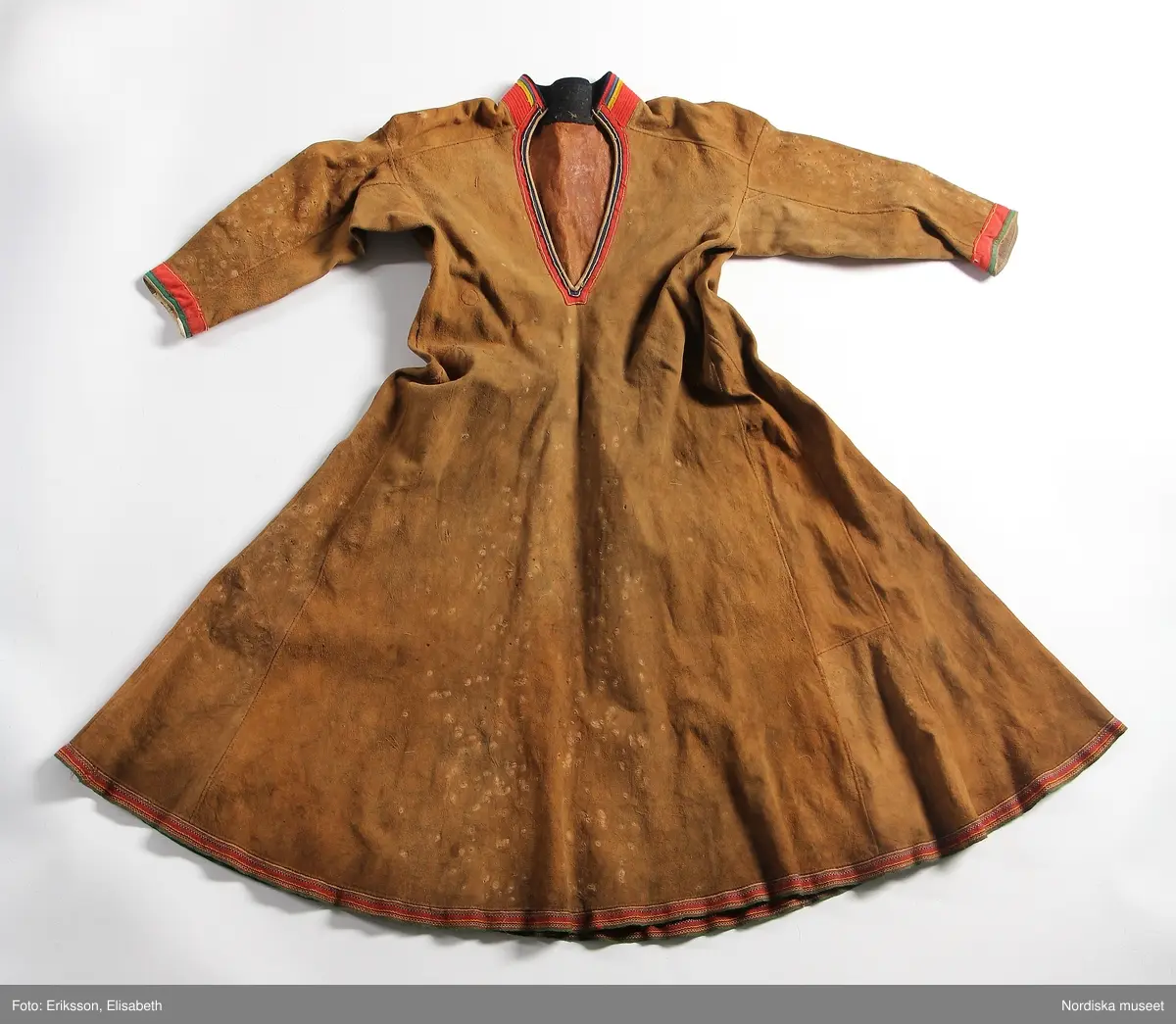
1952. A man’s reindeer-hide dress from Sirkas. Acquired in 1952.
1952. A man’s reindeer-hide dress from Sirkas. Acquired in 1952.Photo: Elisabeth Eriksson, Nordiska museet. Licence: CC BY-NC-ND 4.0. The image is unchanged.

Ájtte

Jukkasjärvi

Nordiska museet holds a wool kolt from Talma, Jukkasjärvi. Thomas Thuuri sold it to the museum on 30 October 1945. (Nordiska museet)
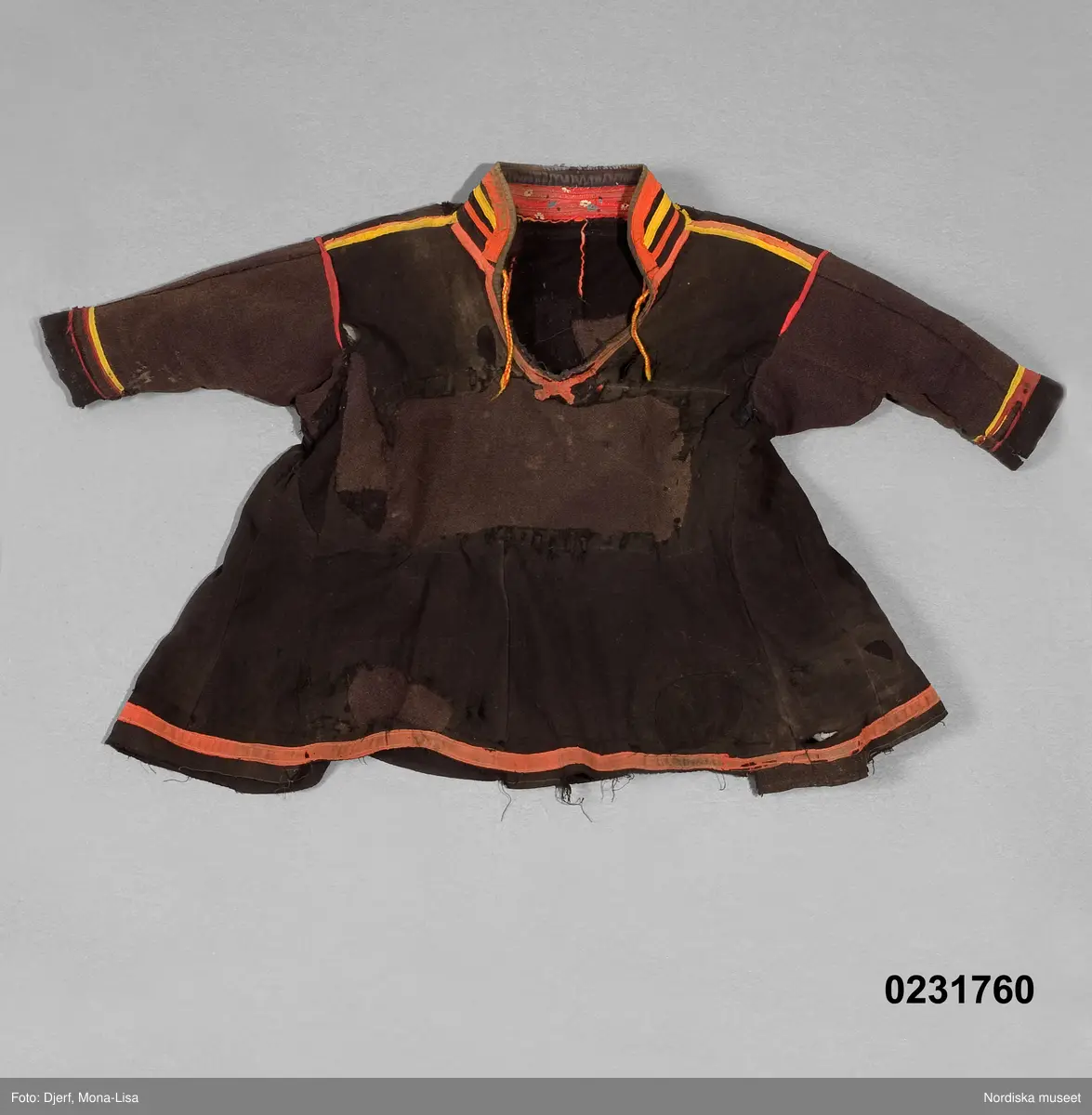
1945. A wool kolt from Talma, Jukkasjärvi. Acquired in 1945.
1945. A wool kolt from Talma, Jukkasjärvi. Acquired in 1945.Photo: Mona-Lisa Djerf, Nordiska museet. Licence: CC BY-NC-ND 4.0. The image is unchanged.

Sorsele

Sorsele is in Västerbotten. This is a woman’s cloth kolt of light wadmal. It was already in the museum before 1904.

Västerbottens museum
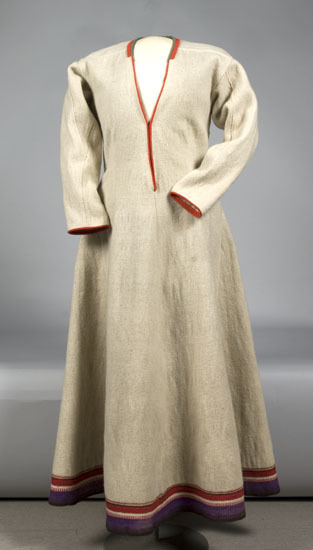
1800s. Light wadmal, a red edge at the neck, and a woven band at the hem.
1800s. Light wadmal, a red edge at the neck, and a woven band at the hem.Photo: Västerbottens museum. Licence: CC BY 4.0. The image is unchanged.

Västerbottens museum

Lovozero

The museum in Lovozero holds clothing of the Kola Sámi. No photograph has been given yet.

Lovozero museum

Lovozero museum

Lovozero museum