Food
1674
The book says the food was not the same everywhere. In the mountains people lived almost wholly on the reindeer: boiled meat in winter, and milk, cheese, and dried meat in summer. The tongue and the marrow were offered to the priest. Reindeer blood was boiled in water to a pudding. From Norway they sometimes bought a few sheep, goats, and oxen, milked them in summer, and killed them in winter, because there was neither pasture nor a stable. In the woods they ate fish, birds, and game, most often fish, and preferred bear above the rest. Bread and salt were almost unknown. Dried fish was ground instead of bread. Instead of salt, the inner rind of the pine was dried, buried, and reddened over a fire. On Fridays they ate no meat. Strawberries were boiled in their own juice and kept in birch bark. (Schefferus 1674)
Drink
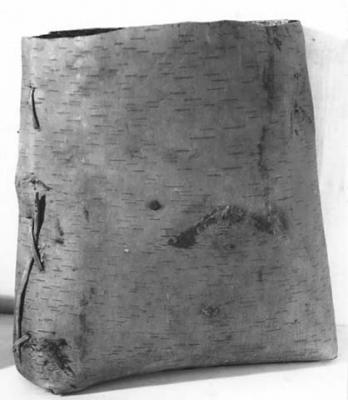
The drink was ordinarily water, and in winter it was taken hot from the kettle with a spoon. The book calls the broth of meat and fish Læbma. They also drank whey. Ale and beer were unknown. Brandy was bought at the fairs. The book prints two graces. For Pite lappmark it translates: all thanks be given to God, who hath provided this meat. For Torne lappmark it prints the grace in their tongue and translates: good God, praised be thou for this meat, and let what we have eaten give strength to our bodies. The words are not retyped here. The birch-bark vessel is from Siida’s collection. The catalog subjects include the Skolt. (Schefferus 1674; Sámi Museum Siida)