Children
Birth
The book says the birth was in the hut, in winter as well, with the fire in the middle. The child was washed first in cold water or snow, and then set in hot water up to the neck. No water was let onto the head before the priest’s baptism. The wrapping was a hare skin, not linen. The mother’s first drink after the birth was whale fat from Norway. Her place was by the door, on the left. The book says they seldom kept their beds long. In a week or two they travelled. Baptism was often only in winter, when the priest came. Gustavus Adolphus writes in 1634 that if a child died before winter, the child died unbaptized, and that some were grown before they were baptized. The name was taken from kin. Rheen says the names wanted were Thor, Guaarm, Finne, and Pagge, and that the priests turned them from it. A name was also changed in memory of a dead kinsman. The book tells of looking at the moon. That is not set out here. (Schefferus 1674)
The cradle
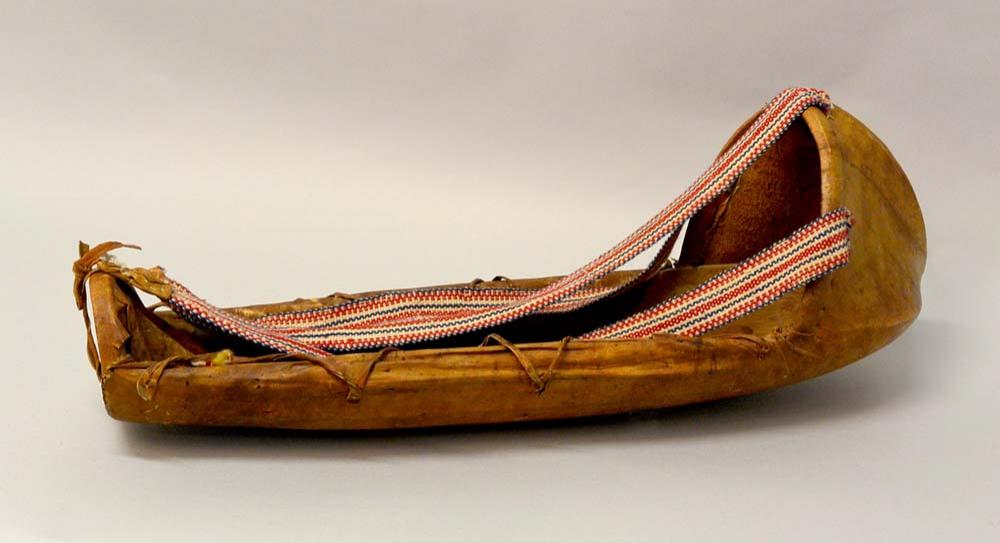
The mother nursed the child for two, three, or four years. If she could not, reindeer milk was given with a spoon. A piece of reindeer meat was also put in the mouth, so the child sucked the gravy. The cradle was a hollowed tree, like a boat, with a leather cover and a leather arch over the head. Under the child they laid red moss dried in summer, not linen. The cradle hung from the roof of the hut and was swung. The rattles were rings of a metal the book calls alchymy. For a boy they hung a small bow, arrows, and a spear of reindeer horn. For a girl, the wings, feet, and beak of a white partridge. The book names the bird Smæripa, and Lagopus. Schefferus rejects the back-baskets in Olaus Magnus as the painter’s fancy. The father taught the boys, the mother the girls. The first person to see a tooth gave a calf. Its increase stayed with the child. A second reindeer the book calls Waddom, the given one. If the parents died, the nearest kin kept the portion. The cradle is from Siida’s collection. (Schefferus 1674; Sámi Museum Siida)